Salt on the Lens, Steam in the Air: A Christmas Day Dip in Photographs
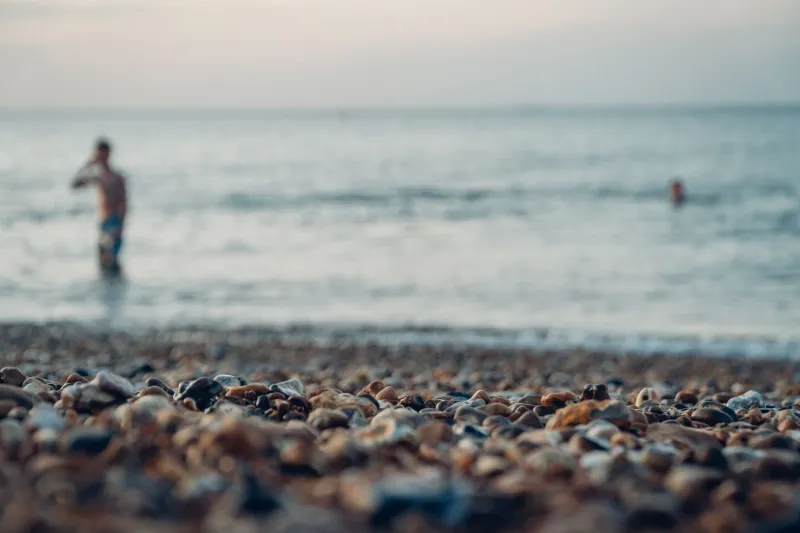
Christmas Day on a British beach has a very particular soundtrack. There is the shingle shifting underfoot, the low murmur of a tide that has no interest in the occasion, and then the nervous laughter of people in swimwear pretending they are not cold yet. By the time the first brave soul reaches the water in 2026, the story is already halfway told. The trick is to photograph all of it — not just the plunge.
The story starts in the car park
Arrive early. Not because the light will be spectacular — it often will not — but because the best frames happen before anyone gets wet. This is where you find the rituals: the careful folding of a coat onto a wing mirror, the Santa hat pulled over a swimming cap, the friend who insists on a group photo while everyone is still upright and capable of smiling.
Keep your camera cool. If you step out of a warm car into cold sea air, condensation will fog your lens faster than you can say ‘Merry Christmas’. Let the kit acclimatise in the boot for a few minutes, and carry a microfibre cloth in a zip pocket rather than buried at the bottom of your bag. Spare batteries belong somewhere warm — an inside pocket is fine. Cold drains them quietly.
Nervous energy is the first photograph
Look for hands. Gloved hands holding a flask. Bare hands clutching a towel. A foot hovering above wet sand. The moment before the dash is full of small contradictions: people laughing with their shoulders up around their ears, children who are suddenly not sure about any of this, and the self-appointed cheerleader who is already halfway down the beach.
Use a wider lens here. A 35mm equivalent lets you stay close without crowding, and it keeps the beach, the sky and the huddle of bodies in the same frame. Ask first if you are going to photograph faces close-up. A quick ‘Do you mind if I take a few frames?’ is usually met with a grin, especially when everyone is still in the showing-off stage.
Flat winter light is not the enemy
Christmas morning light on the coast is often soft, grey and reluctant. That can be a gift. There are no harsh shadows to hide in, and the muted palette suits the story: blues, greys, the occasional flash of red Santa hat or bright towel. Expose for faces rather than the sea. If the sky is bright and the beach is dark, spot-meter on a cheek and let the horizon do what it likes. A little blown-out sky can feel honest on a cold morning.
Salt spray is the real test. Keep a rain cover or a simple plastic bag over the camera between shots, and wipe the front element often. Do not change lenses on the beach if you can help it. If you must, turn your back to the wind and do it quickly. A lens cloth that has been soaked in sea water is worse than no cloth at all, so carry two.
The plunge is chaos — shoot the edges
When the first group runs for the water, it is tempting to fire continuously and hope. Resist that. Pick your moments. The funniest frames are often at the edges of the action: the person who stops ankle-deep and refuses to go further, the dog barking at the waves, the spectator in a full winter coat sipping tea with enormous satisfaction.
If you are standing in the water, watch your footing and your gear. A wave that looks small from the shingle can send spray straight into an open lens hood. Keep your body between the camera and the worst of it. A slightly higher angle helps separate bathers from the crowd, and a long lens — something around 85mm — lets you catch expressions without getting in the way of the dash for towels.
The dash for towels is the second half of the story
Do not pack up when the swimming stops. The aftermath is where the narrative lands. Wet hair, goosebumped arms, a towel wrapped like a cape, the communal flask of tea being passed between shaking hands. These are the frames that make the set feel human rather than simply adventurous.
Look for steam. Breath in cold air, tea rising from a cup, the mist off wet skin. Backlight or side-light helps here, even if it is only the pale glow of a winter sun trying its best. Get low and shoot through the crowd if you can. The best relief photographs are often crowded, slightly chaotic and full of people leaning in towards warmth.
Edit for the sequence, not the spectacle
A Christmas Day swim can produce hundreds of frames and a story that feels like noise. Edit for sequence. Start with arrival, move through anticipation, allow one or two plunge images, then spend time on the recovery. Six to ten photographs are usually enough. Include a detail — a discarded pair of flip-flops, a thermos lid, a hand gripping a towel — to give the set texture.
And be kind. Some people are doing this for charity, some for tradition, some because a friend dared them. Ask before publishing close-ups of anyone who looks vulnerable, and respect the person who would rather be photographed from behind. The story is warmer when the people in it feel looked after.
Keep your own fingers working
Cold hands make clumsy photographers. Fingerless gloves with a hand-warmer in the palm are a small mercy, and a dry bag for spare layers is worth the faff. Wipe your lens after every few frames, keep the camera out of the wind between shots, and resist the urge to review every image on the back screen while your fingers go numb.
By the time the beach empties and the last flask is capped, you should have something better than a record of an event. You should have a small story about nerve, nonsense and the relief of a warm towel. That is the Christmas Day dip in frames — not just the shock of the water, but the shiver and the smile that come with it.